
Harsh-environment connectivity
IP68 LC rugged assemblies
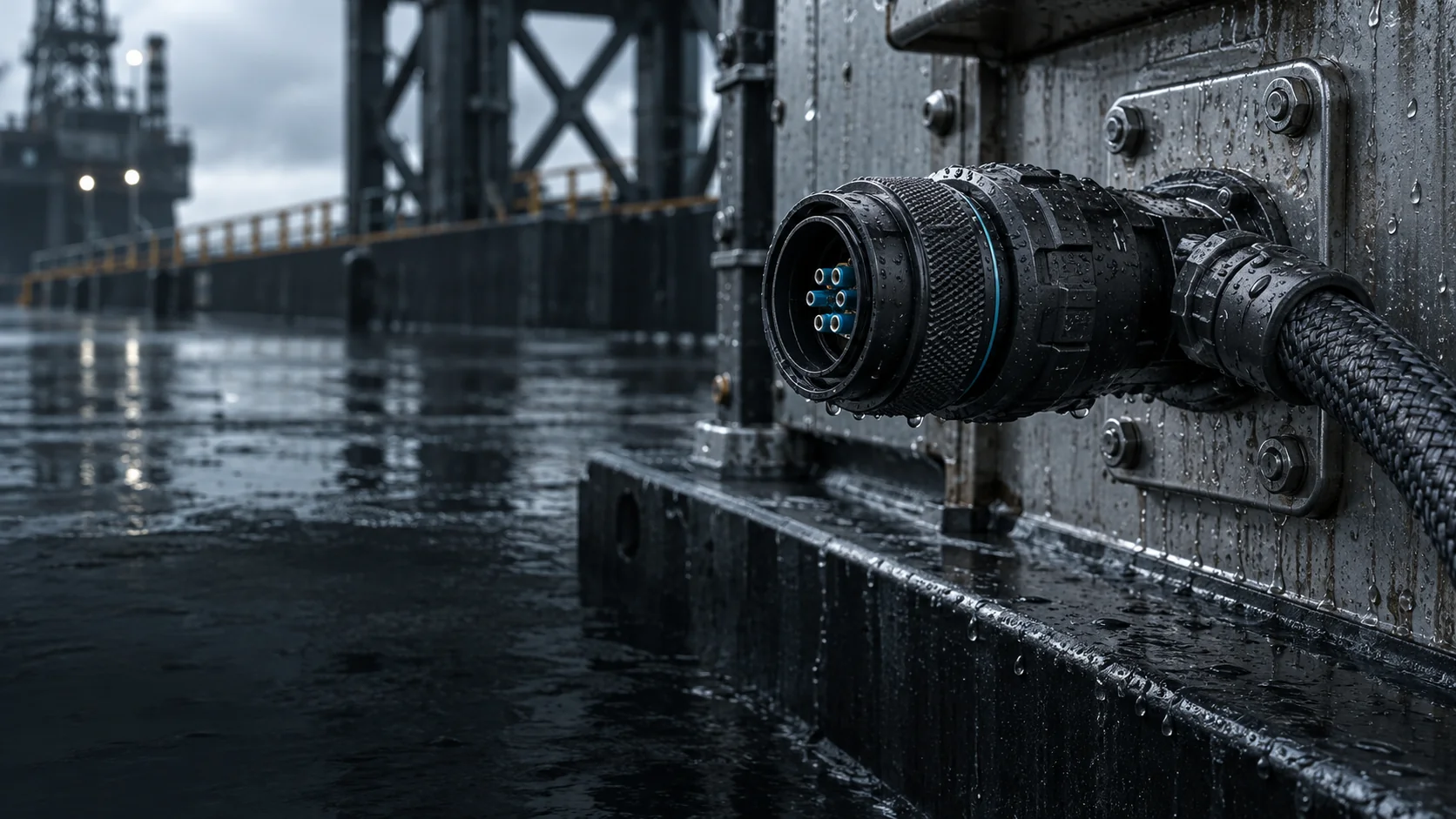
Rugged assemblies integrating duplex LC connectivity into a sealed circular housing for outdoor equipment, transport and industrial terminals. Panel cutout, locking, mated state and cable sealing are critical validation points.
CONFIGURATION ENVELOPE
Specifications and configuration options
| Interface | Duplex LC inside sealed housing |
|---|---|
| Fiber types | OS2 and multimode |
| Fiber count | 2F |
| Length | Configured to approved drawing |
| Testing | Test items and acceptance methods defined in the approved specification |
Insertion loss, return loss and environmental requirements depend on the complete configuration. Final acceptance limits and test methods are defined in the approved specification.
APPLICATIONS
Engineering tasks
- Outdoor equipment ports
- Rail systems
Recommended definition flow
- Submit interfaces, application and installation constraints
- Confirm port map, materials and test method
- Sample and mating validation
- Release volume build after drawing approval
PROCUREMENT QUESTIONS
Questions before sourcing
Provide the application, both interfaces, fiber count, fiber type, length, quantity and installation environment. A drawing or existing sample reduces clarification cycles.
Interface combinations, port mapping, breakout lengths, jacket and labeling can be evaluated. The approved specification and drawing define the final product.
Samples and mating validation are recommended for new interfaces, complex polarity or harsh-environment projects before volume release.
Confirm test method, instrument interface, reference cable, pass/fail thresholds and report format before quotation.
Include required test items, serialisation and report format in your RFQ so data deliverables can be confirmed in the quotation and approved specification.
Submit the configuration, quantity and target date for review against current materials. Final performance, test methods and delivery dates follow the mutually approved documents.